‹ BackHigh NA EUV

High NA EUV

TSMC
2026-09-08 08:45:48

TSMC and Samsung commit to ASML’s new High NA EUV machines

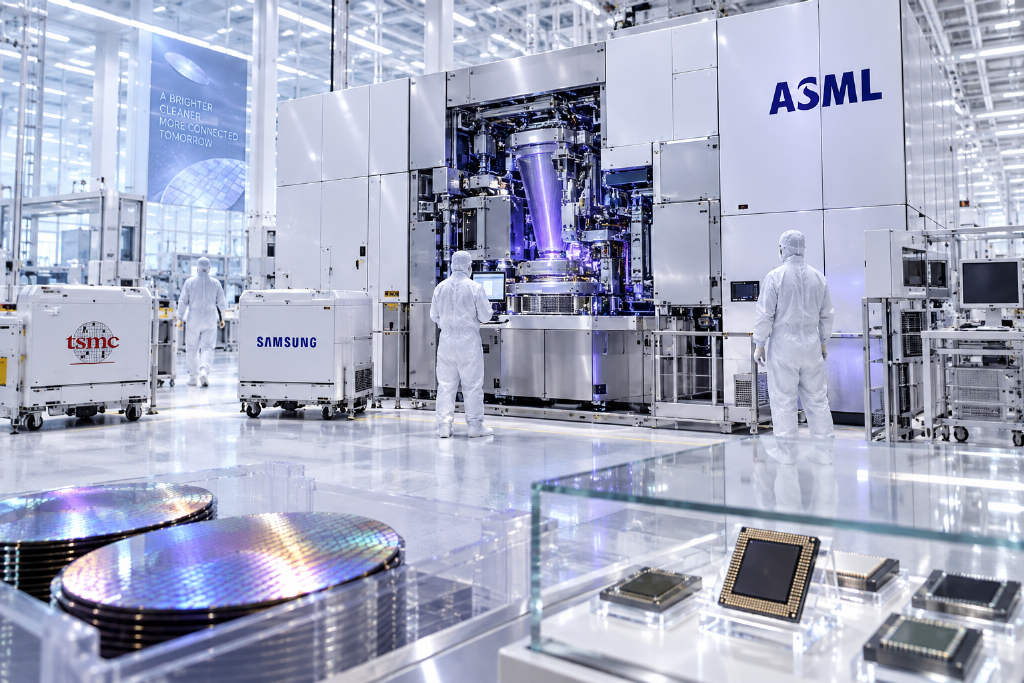
TSMC and Samsung Electronics have committed to adopting ASML’s latest High NA EUV equipment for advanced chip manufacturing, according to a Techub News brief citing CNBC. The report said the move is aimed at meeting rising demand tied to artificial intelligence, particularly the need for smaller and more complex semiconductors. ASML’s High NA EUV, or high numerical aperture extreme ultraviolet lithography, is identified in the item as the equipment both companies plan to use. The brief does not disclose a deployment timeline, order size, or financial terms, but it frames the decision around growing semiconductor requirements linked to AI development.

770
TSMC and Samsung commit to ASML’s new High NA EUV machines
Market Analys
2026-08-06 13:44:00

Interconnect Moves to the Top of the Bottleneck Stack as HBM and Memory Hierarchies Face Repricing

A PANews analysis argues that August 4, 2026 marked a turning point for the memory industry. On the same day, SK hynix and SanDisk introduced the first standard for high-bandwidth flash, or HBF, at FMS 2026, while TrendForce reported that Nvidia was evaluating lower HBM configurations for Rubin Ultra. The article says those two developments point in the same direction: the core constraint in AI infrastructure is shifting away from on-package memory alone and toward interconnects across chips, packages, racks, and systems. The piece traces that shift through Nvidia’s Vera Rubin launch, NVLink 6 bandwidth gains, Spectrum-X CPO shipments, Intel’s EMIB-T packaging push, TSMC’s reported work on an EMIB-like approach, and the emergence of UCIe-linked memory tiers such as HBF. In that framework, optical and electrical interconnects sit at the top of the stack, advanced packaging becomes the physical foundation, HBM remains essential but less open-ended from an investment perspective, HBF represents a new category aimed at inference-era capacity pressure, and CXL memory pooling remains an option for later years. Rather than framing this as a broad “memory bull market,” the article’s main point is that value inside the storage empire is being redistributed as the bottleneck migrates.

2380
Interconnect Moves to the Top of the Bottleneck Stack as HBM and Memory Hierarchies Face Repricing
Samsung Elect
2026-07-16 10:16:52

Samsung Holds Back High NA EUV Production Rollout as Foundry Profitability Takes Priority

Samsung Electronics has installed two High-NA extreme ultraviolet lithography systems for its foundry business, but it is not yet putting the tools into mass-production lines. The decision reflects a cautious capital allocation stance rather than a clear technology bottleneck. According to the report, Samsung’s foundry unit is seen as one of the businesses most likely to return to profit as early as the fourth quarter this year after years of losses. Bringing expensive equipment fully online now would lift depreciation and operating costs, increasing fixed expenses at a sensitive point in the unit’s earnings recovery. At the same time, Samsung’s reported 2 nm yield has reached about 55%, close to the roughly 60% threshold that the industry commonly views as sufficient for stable mass production. That suggests the company’s hesitation is not mainly about process readiness for High NA EUV. Korean media said Samsung is keeping equipment spending to a minimum until the foundry business has a clearer path to sustainable profitability. The move shows a practical balance in the advanced-node race: the company has the technology and tools in place, but financial discipline is being treated as more urgent than accelerating the catch-up pace.

1770
Samsung Holds Back High NA EUV Production Rollout as Foundry Profitability Takes Priority
US inflation
2026-07-16 04:12:00

Cooling U.S. inflation lifts big tech while memory stocks tumble, with PayPal surging and SpaceX slipping below issue price

U.S. producer price data for June came in below expectations, reinforcing the cooling inflation trend already signaled by the latest CPI release and prompting markets to scale back expectations for further Federal Reserve tightening. Stocks climbed across the board, with the Dow Jones Industrial Average up 0.29%, the S&P 500 gaining 0.38%, and the Nasdaq Composite adding 0.62%. The move favored large-cap technology names as valuation pressure on growth stocks eased. Fed officials, however, did not present a single message. Warsh said higher prices tied to AI infrastructure investment do not automatically amount to lasting inflation, while Governor Cook warned that AI investment, tariffs, and Middle East-related supply disruptions have pushed inflation risks back above employment risks. New York Fed President John Williams sounded more measured, saying inflation remains high but may be peaking. Elsewhere, oil remained caught between geopolitical risk and inventory pressure, with WTI and Brent trading near $80 and $85, respectively. In equities, Apple rose 4.01% to another record, PayPal jumped 17% on a reported takeover bid topping $53 billion, and memory chip names including SK Hynix, SanDisk, Micron, and Western Digital fell sharply. SpaceX closed down 0.60% and briefly traded at $132.15, below its $135 offering price, as investors looked ahead to a Starship test flight and the company’s first quarterly earnings report.

1770
Cooling U.S. inflation lifts big tech while memory stocks tumble, with PayPal surging and SpaceX slipping below issue price